


Root canal treatment is a contemporary branch of dentistry that offers supportand help to all who wish to keep their natural teeth for life
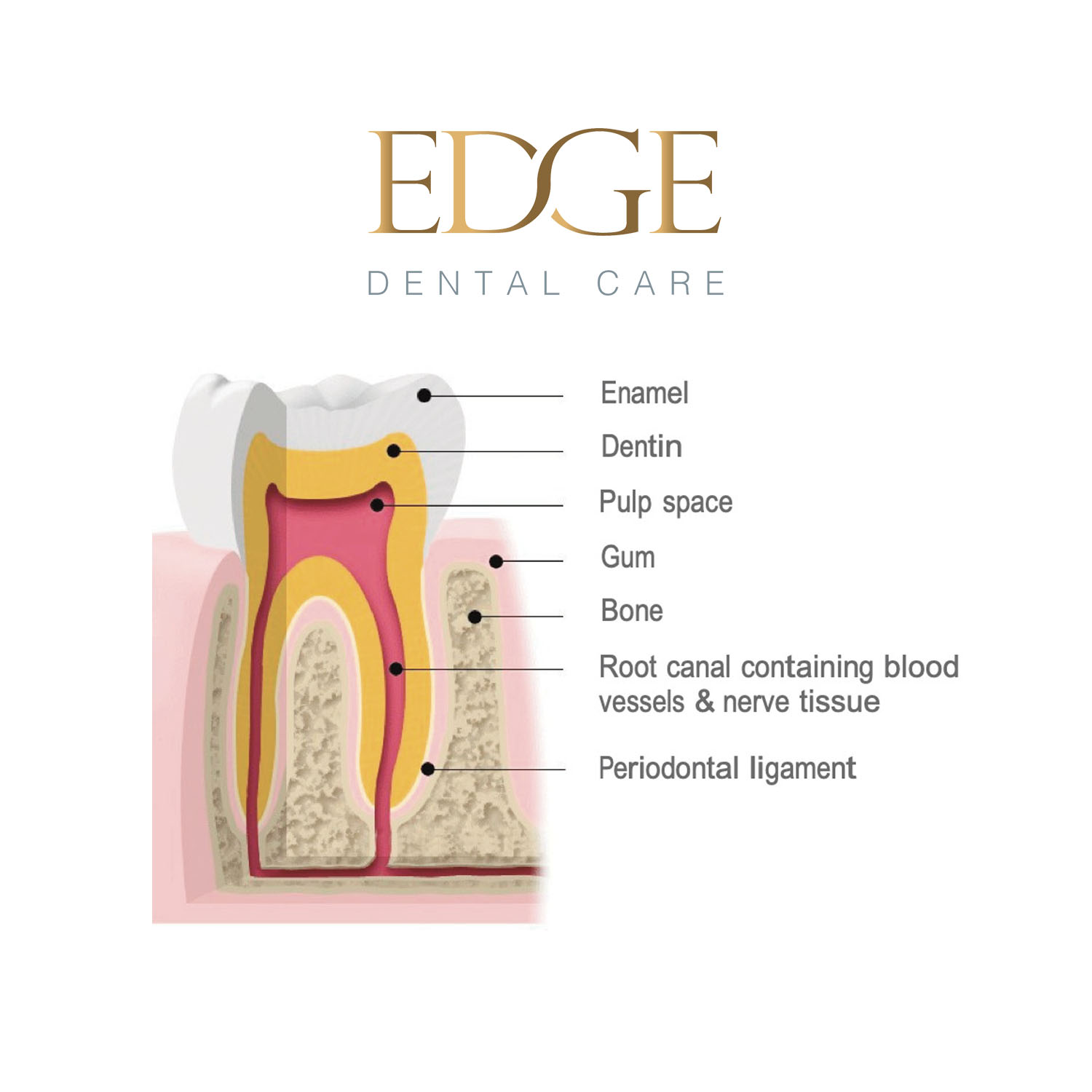
Deep within a tooth is soft tissue called the pulp. If the pulp becomes infected it is necessary to remove this and clean and disinfect the inside of the tooth before filling the root. This will prevent infection spreading to the bone and importantly will also ensure that the tooth can be retained, usually indefinitely. Thus, the need for replacement teeth such as implants, dentures or bridges can be avoided.
A root filled tooth is a ‘natural’ implant and usually requires much less ‘after-treatment’ than repairing a space with an implant, a denture, or a bridge. Root fillings save teeth!
The signs that a tooth may need a root filling are

No! Modern analgesic techniques ensure that this treatment can be undertaken without pain and, in experienced hands, it is rare for pain to be felt.
During treatment your tooth is isolated using a ‘dental dam’ to prevent instrument loss and infection from saliva. It will make the treatment safer, more comfortable and lead to a more predictable outcome. After treatment discomfort may be felt, but normally this can be controlled by paracetamol or ibuprofen and usually lasts for no more than a few days.
Sometimes there may be more than one tooth in an arch requiring treatment.This explains why pain can continue in an area after a tooth has been successfully treated. In rare situations teeth can remain ‘bite’ sensitive for longer periods, perhaps months. Eventually they settle down.
All dentists are trained in root filling techniques, however it may be felt that your problem is more complex than they are able or happy to deal with. In order to give your tooth the best prognosis your dentist may prefer to refer you to a specialist who is trained to offer a more comprehensive service. If you are referred, it is likely that an operating microscope will be used to visualize your tooth and digital radiography to image your tooth.
Contact us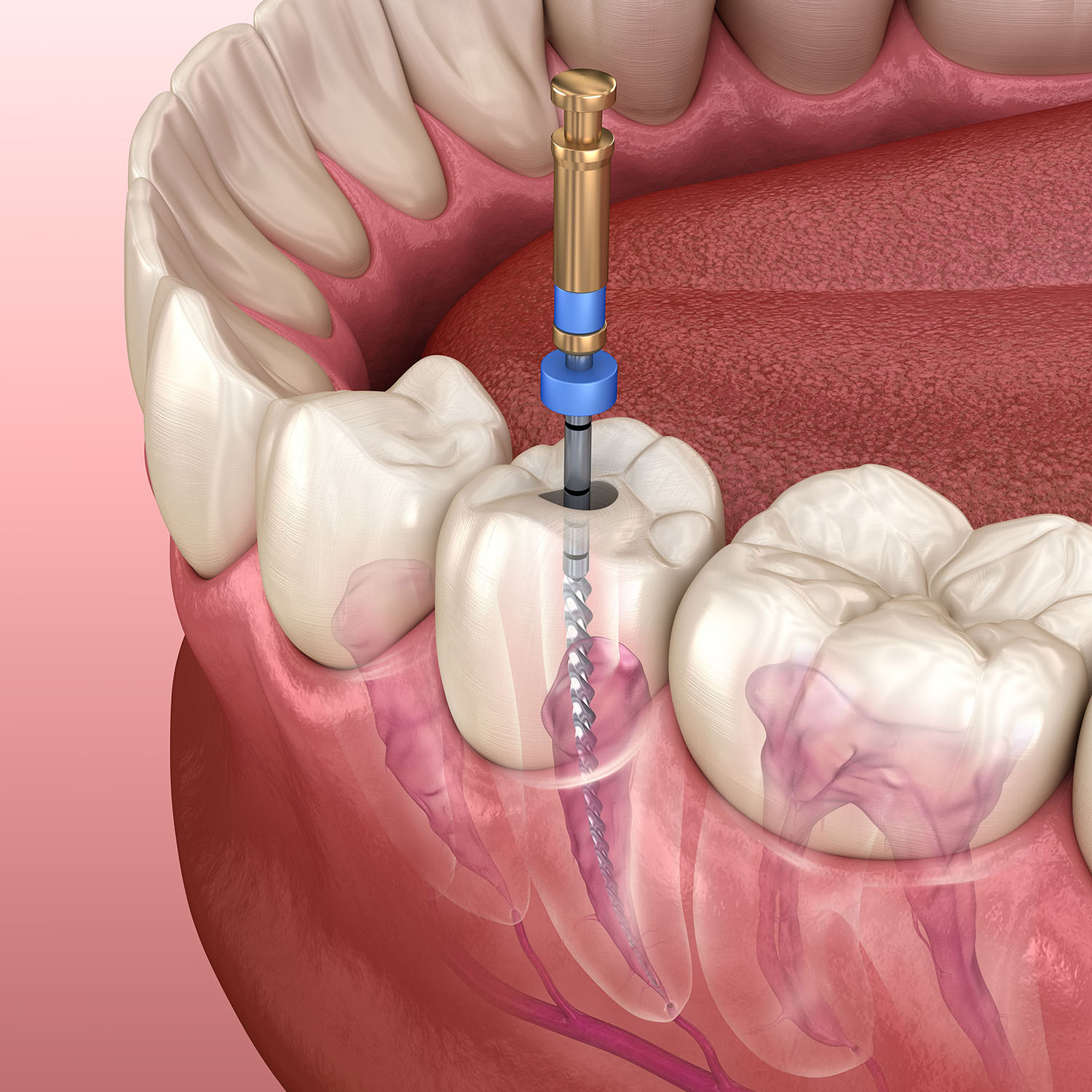

Most cases can be successfully treated in one or two visits. Depending on the tooth and the complexity of the case, appointments are between 30 and 120 minutes duration.
Contact usRoot filling teeth is a complex procedure taking time and requiring the use of expensive equipment. The cost of endodontic care will vary depending on who does the treatment and which tooth requires attention. If you are being referred, it is most likely that this will be on a private basis. Costs and charges as well as a detailed understanding of your problem will be discussed before you are committed to treatment as a routine matter of consent. At this time you will be able to ask questions should you have any concerns.
Contact us

The tooth will require a permanent filling and/or crown. This will be carried out by your own dentist. If you are referred, your general dentist will receive written information describing what has been done and will include one or more relevant X-ray images (radiographs).
Contact us
Root canal treatment, also known as endodontic treatment, is carried out when the dental pulp, the soft tissue inside the tooth containing nerves and blood vessels becomes inflamed or infected.
This can happen when bacteria enter the pulp, usually as a result of decay, a large or failing filling, a crack, trauma, or previous dental treatment.
If the infection is not treated, bacteria can spread through the root canal system and into the tissues surrounding the tip of the tooth’s root. This can result in an infection or dental abscess. An abscess may be painful, but it can also develop without causing any
noticeable symptoms.
Symptoms vary from person to person. You may experience:
• Prolonged sensitivity to hot or cold food and drinks.
• Spontaneous or throbbing toothache
.• Pain that may require pain relief
.• A dull, persistent ache.
• Tenderness or pain when biting or chewing.
• Swelling around the tooth or face.
• Occasionally, no symptoms at all.
Facial swelling requires urgent dental assessment. If you develop significant or rapidly increasing swelling, particularly if you are having difficulty swallowing or breathing, you should seek urgent medical attention.
Symptoms vary from person to person. You may experience:
• Prolonged sensitivity to hot or cold food and drinks.
• Spontaneous or throbbing toothache.
• Pain that may require pain relief.
• A dull, persistent ache.
• Tenderness or pain when biting or chewing.
• Swelling around the tooth or face.
• Occasionally, no symptoms at all.
Facial swelling requires urgent dental assessment. If you develop significant or rapidly increasing swelling, particularly if you are having difficulty swallowing or breathing, youshould seek urgent medical attention.
Dental infection can occur for several reasons, including:
• Extensive tooth decay.
• A large or deep filling.
• A heavily restored tooth or tooth with a crown.
• A crack or fracture in the tooth.
• Previous trauma to the tooth.
• A previous root canal treatment that has become infected or has not healed as expected.
In many cases, an infected tooth can be successfully treated with root canal treatment, allowing you to retain your natural tooth as a functioning and aesthetic part of your smile.
However, if a tooth is too badly damaged or cannot be predictably restored, extraction may be the most appropriate option.
If a tooth has previously undergone root canal treatment and has subsequently become infected, treatment options may include root canal re-treatment or extraction. These options will be discussed with you following assessment.
This is a very common question.
The source of an endodontic infection is usually the infected or necrotic pulp and bacteria within the root canal system. Antibiotics do not reliably reach and eliminate the source of infection inside the tooth.
For this reason, antibiotics alone generally cannot cure an infected root canal.
The most effective way of treating the source of the infection is to carefully clean, disinfect and seal the root canal system.
Antibiotics may sometimes be prescribed when there are signs that the infection is spreading or when there is significant systemic involvement. They can help control the body’s response to infection, but they are not a substitute for dental treatment.
The main aim of root canal treatment is to remove infected or damaged pulp tissue and eliminate bacteria from the root canal system.
Treatment generally involves:
1. Accessing the tooth through a small opening made in its surface.
2. Locating the root canals within the tooth.
3. Cleaning and shaping the canals to remove infected tissue and bacteria.
4. Disinfecting the root canal system using specialised instruments and solutions.
5. Filling and sealing the canals with a biocompatible material called gutta-percha.
6. Restoring and protecting the tooth after root canal treatment, usually with advice to your dentist regarding the most appropriate final restoration.
Front teeth commonly have one root canal, whereas premolar and molar teeth may have two, three, four or sometimes more.
Root canals can be extremely fine and may be curved, narrowed, blocked, calcified oraffected by previous treatment. For this reason, some cases are considerably morecomplex than others.
Appointments are typically around one to two hours, although the exact duration depends on the tooth and the complexity of the treatment.
Some cases can be completed in one appointment, while others may require two or more visits.
During treatment, small intraoral dental X-rays may be taken. These allow us to assess the anatomy of the tooth and monitor the progress of treatment.
We understand that the words “root canal treatment” can cause anxiety.
Perhaps you have had a difficult dental experience in the past, or perhaps someone has shared an unfortunate story with you!
We want to reassure you that your comfort is our priority.
Root canal treatment is carried out under local anaesthetic. We take time to ensure the tooth is adequately numb before treatment begins and will continue to monitor your comfort throughout the appointment.
You should experience little or no discomfort during the procedure.
If you are anxious about dental treatment, please let us know. We would much rather know about your concerns so that we can support you and make your experience as comfortable as possible.
Root canal treatment has a high rate of success, but the outcome varies depending on a number of factors.
For example, the prognosis may be influenced by:
• Whether this is the first root canal treatment or a re-treatment.
• The complexity of the root canal anatomy.
• The extent and duration of infection.
• The condition of the tooth and surrounding tissues.
• The quality and condition of the final restoration.
• Whether the tooth has cracks or other structural problems.
We will discuss the expected prognosis and any factors that may affect the outcome with you during your consultation.
Unfortunately, no dental treatment can be guaranteed to succeed.
Root canal treatment is a biological treatment, and healing depends on a number of factors that cannot always be controlled.
We will always aim to provide treatment to the highest possible standard and will recommend appropriate follow-up to monitor the tooth and surrounding tissues.
If a tooth does not heal as expected, or if infection develops again, even several years later further treatment may sometimes be possible. Depending on the circumstances, this could include further endodontic treatment, endodontic surgery, or extraction.
We can then revisit the alternative treatment options discussed with you at your original consultation.
A root-filled tooth is often structurally compromised because of the original decay, cracks, previous restorations and the amount of tooth tissue that may have been lost.
As a result, a root-treated tooth may be more susceptible to fracture, particularly when it is heavily restored.
Once your root canal treatment is complete, we will liaise with your general dentist regarding the most appropriate way to restore and protect the tooth.
For many posterior teeth, a protective crown or other cuspal coverage restoration may be recommended.
Protecting the tooth appropriately can help reduce the risk of fracture and improve its long-term prognosis.
Your general dentist will advise you on the most suitable final restoration for your particular tooth.
Sometimes, yes.
There is no significant difference in reported success rates between appropriately selected cases treated in a single visit and those treated over multiple visits.
Wherever possible and appropriate, we aim to complete treatment efficiently, potentially in a single appointment.
However, some cases are better treated over two or more appointments. This may be necessary because of:
• The complexity of the root canal anatomy.
• The amount of infection present.
• Persistent symptoms or infection.
• Difficulty accessing or disinfecting the canals.
• Previous root canal treatment.
• The amount of treatment required.
Our priority is not simply to complete treatment quickly, but to give the tooth the best possible opportunity to heal.
It is normal for the tooth to feel slightly tender following treatment.
You may experience:
• Mild discomfort when biting.
• Tenderness around the tooth.
• Some sensitivity in the surrounding tissues.
This usually settles over the following few days and can generally be managed with appropriate pain relief.
Occasionally, a tooth can become more painful or develop swelling following treatment. If you experience significant or increasing pain, swelling, or any other concern, please contact your dentist or endodontist so that we can provide appropriate advice.
You should also follow any specific post-treatment instructions provided to you.
All dentists receive training in root canal treatment as part of their dental education. Many straightforward cases can therefore be successfully managed in general dental practice.
However, some teeth present additional challenges.
A Specialist in Endodontics (Endodontist) has undertaken advanced post graduate training specifically focused on the diagnosis and treatment of diseases affecting thedental pulp and tissues surrounding the roots of teeth.
An endodontist regularly manages complex cases, including:
• Difficult or unusual root canal anatomy.
• Calcified or very narrow canals.
• Curved canals.
• Previous root canal treatment that has not healed.
• Persistent infection.
• Dental trauma.
• Cracked or structurally compromised teeth.
• Cases requiring advanced diagnostic techniques or specialised procedures.
Endodontic treatment may also involve the use of specialised equipment, such as an operating microscope and advanced imaging, to help visualise and treat complex anatomy.
Being referred to an endodontist does not necessarily mean that your tooth is in a hopeless condition. In many cases, the purpose of referral is to give the tooth the best possible opportunity of being retained.
Most teeth respond well to appropriately performed root canal treatment.
However, occasionally a tooth may remain infected or become infected again in the future.
This can happen for a variety of reasons, including complex anatomy, persistent bacteria, leakage, a new restoration problem or structural problems with the tooth.
Depending on the circumstances, treatment options may include:
• Monitoring the tooth.
• Root canal re-treatment.
• Endodontic surgery.
• Extraction.
We will discuss the options available to you and help you understand the benefits, limitations and risks of each.
Although our aim is always to preserve a natural tooth where this is predictable and appropriate, not every tooth can be successfully retained.
If a tooth is extensively fractured, has insufficient remaining tooth structure, or has a poor long-term prognosis for another reason, extraction may be recommended.
If this is the case, we will explain why the tooth cannot be predictably treated and discuss the available alternatives with you.
Root canal appointments are often lengthy and involve reserving dedicated clinical time and specialised equipment.
We therefore kindly ask that you provide at least 48 hours’ notice if you need to cancel or rearrange an appointment.
Appointments cancelled with less than the required notice, or missed appointments, maybe subject to a cancellation or missed appointment fee.
We appreciate your understanding, as this allows us to offer appointments to other patients who may be waiting for treatment.
We hope that this information has answered some of the questions you may have about root canal treatment.
Every tooth and every patient is different. The information on this page is intended as general guidance and does not replace a clinical examination or personalised advice.
If there is anything you are unsure about, please ask us. There is no such thing as a silly question when it comes to your dental treatment.
Our aim is for you to understand your treatment, feel comfortable with the decisions being made, and know what to expect at every stage of your care.
Please don’t hesitate to ask if you would like us to explain anything further, you can also download copy of the FAQ's by clicking here.


At Edge Dental Care we believe financial considerations should not be an obstacle to obtaining some of our more expensive dental services, we therefore may be able to offer flexible payment terms.
learn more
